Tag: Criminal Law

  • Criminal Law vs. Civil Law: What You Need to Know

    Criminal Law vs. Civil Law: What You Need to Know

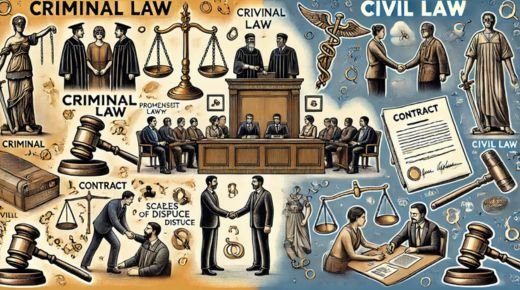
    When navigating the legal landscape, understanding the distinction between criminal law and civil law is essential. Both areas of law govern different aspects of human behavior and legal consequences. This article aims to provide a comprehensive comparison of criminal law and civil law, highlighting their unique features, processes, and implications.

    Criminal Law

    Criminal law pertains to offenses against the state or society at large. It addresses actions that are deemed harmful to public safety and order, such as theft, assault, and murder. The primary goal of criminal law is to deter and punish criminal behavior, thereby maintaining public order and safety.

    Key Characteristics of Criminal Law:

    1. Purpose and Objectives:
      • Punishment: Criminal law seeks to punish offenders who violate legal statutes. The punishment can range from fines and probation to imprisonment or even capital punishment in severe cases.
      • Deterrence: By imposing penalties, criminal law aims to deter individuals from committing similar offenses in the future.
      • Rehabilitation: In some cases, the criminal justice system aims to rehabilitate offenders, preparing them for reintegration into society.
    2. Parties Involved:
      • Prosecution vs. Defense: In a criminal case, the government prosecutes the offender. The prosecution represents the state or federal government and is responsible for proving the defendant’s guilt. The defendant, on the other hand, has the right to an attorney and can present a defense against the charges.
    3. Burden of Proof:
      • Beyond a Reasonable Doubt: The prosecution must prove the defendant’s guilt beyond a reasonable doubt. This is the highest standard of proof in the legal system, reflecting the serious nature of criminal charges and potential penalties.
    4. Legal Process:
      • Arrest and Charges: The process begins with an arrest, followed by formal charges filed by the prosecution. The defendant will face a preliminary hearing and, if the case proceeds, a trial.
      • Trial and Sentencing: If found guilty, the defendant is sentenced according to the severity of the offense and relevant legal guidelines.

    Civil Law

    Civil law, on the other hand, deals with disputes between individuals or organizations. These disputes often involve personal rights, property, and contractual obligations. Unlike criminal law, civil law does not focus on punishing offenders but rather on resolving conflicts and compensating victims.

    Key Characteristics of Civil Law:

    1. Purpose and Objectives:
      • Resolution of Disputes: Civil law aims to resolve disputes between parties, such as contract breaches, property disputes, or personal injury claims.
      • Compensation: The primary objective is to provide compensation or restitution to the injured party. This can include financial damages, specific performance (fulfillment of a contract), or injunctions (court orders to do or not do something).
    2. Parties Involved:
      • Plaintiff vs. Defendant: In a civil case, the plaintiff is the party bringing the lawsuit, claiming to have been harmed by the defendant’s actions. The defendant is the party being sued and must respond to the allegations.
    3. Burden of Proof:
      • Preponderance of the Evidence: The plaintiff must prove their case by a preponderance of the evidence, meaning it is more likely than not that their claims are true. This is a lower standard of proof compared to criminal cases.
    4. Legal Process:
      • Filing a Lawsuit: The process begins with the plaintiff filing a complaint outlining the allegations and the relief sought. The defendant then responds with an answer.
      • Discovery and Trial: Both parties engage in discovery, exchanging evidence and information. If the case does not settle, it proceeds to trial, where a judge or jury determines the outcome.

    Key Differences Between Criminal Law and Civil Law

    1. Nature of the Offense:
      • Criminal Law: Focuses on offenses against society or the state, such as theft, assault, or fraud.
      • Civil Law: Deals with disputes between private parties, including contract breaches, property disputes, or personal injury claims.
    2. Purpose:
      • Criminal Law: Aims to punish offenders, deter criminal behavior, and rehabilitate individuals.
      • Civil Law: Seeks to resolve disputes, provide compensation, and enforce legal rights and obligations.
    3. Burden of Proof:
      • Criminal Law: Requires proof beyond a reasonable doubt, reflecting the serious nature of criminal charges.
      • Civil Law: Requires proof by a preponderance of the evidence, which is a lower standard.
    4. Outcome:
      • Criminal Law: Results in penalties such as fines, probation, or imprisonment.
      • Civil Law: Results in remedies such as monetary compensation, specific performance, or injunctions.
    5. Parties Involved:
      • Criminal Law: The state or government prosecutes the case against the defendant.
      • Civil Law: Private individuals or organizations bring lawsuits against each other.

    Examples to Illustrate the Differences

    1. Criminal Case Example:
      • Case: A person charged with armed robbery.
      • Outcome: If convicted, the defendant may face imprisonment, fines, or probation. The prosecution must prove the defendant’s guilt beyond a reasonable doubt.
    2. Civil Case Example:
      • Case: A homeowner suing a contractor for breach of contract over faulty repairs.
      • Outcome: If the homeowner prevails, they may receive financial compensation or require the contractor to complete the repairs. The homeowner must prove their case by a preponderance of the evidence.

    Conclusion

    Understanding the differences between criminal law and civil law is crucial for navigating legal issues effectively. Criminal law focuses on offenses against society, aiming to punish and deter criminal behavior, while civil law addresses disputes between private parties, seeking to resolve conflicts and provide compensation. Knowing these distinctions helps individuals and organizations make informed decisions when facing legal matters.

    Whether you are involved in a criminal case or a civil dispute, consulting with a legal professional can provide guidance tailored to your specific situation. Legal experts can help you understand your rights, the legal process, and the best course of action to achieve a favorable outcome.

  • Understanding Criminal Law: A Comprehensive Guide to Key Concepts and Legal Processes

    Understanding Criminal Law: A Comprehensive Guide to Key Concepts and Legal Processes

    Criminal law is a crucial aspect of the legal system that governs the prosecution of individuals accused of committing crimes. This branch of law is designed to maintain public order and deter unlawful behavior by holding wrongdoers accountable. Whether you’re facing charges or simply looking to understand the field better, this article will provide a detailed overview of criminal law, its key principles, and how it functions in the justice system.

    What is Criminal Law?

    Criminal law refers to the body of law that defines criminal offenses, regulates the apprehension, charging, and trial of suspected offenders, and sets penalties and punishments for those convicted. It is fundamentally concerned with protecting society by penalizing behavior that is deemed harmful to public safety and order. Unlike civil law, which deals with disputes between individuals or entities, criminal law involves actions that are considered offenses against the state, even if the victim is an individual.

    Key Principles of Criminal Law

    The field of criminal law is based on several important principles that shape how laws are applied and how justice is administered. These include:

    1. Presumption of Innocence: One of the core principles of criminal law is that an individual accused of a crime is presumed innocent until proven guilty. This fundamental concept ensures that the prosecution must prove the defendant’s guilt beyond a reasonable doubt.
    2. Mens Rea and Actus Reus: In criminal law, to establish a crime, both the mental state (mens rea) and the physical act (actus reus) must be present. Mens rea refers to the intention or knowledge of committing a criminal act, while actus reus refers to the actual commission of the act. Both elements must be demonstrated to secure a conviction.
    3. Due Process: Criminal law guarantees that individuals accused of crimes will receive fair treatment throughout the legal process. This includes rights such as the right to a lawyer, the right to remain silent, and the right to a speedy and public trial.
    4. Proportionality: Criminal penalties must be proportionate to the severity of the crime. This principle ensures that punishments are appropriate and not excessively harsh.

    Categories of Criminal Offenses

    Criminal offenses can be categorized in various ways, depending on their severity and the punishment they carry. The two primary categories are felonies and misdemeanors:

    • Felonies: These are the most serious criminal offenses, typically involving significant harm to people or property. Felonies include crimes such as murder, rape, robbery, and drug trafficking. Convictions can result in long prison sentences, heavy fines, or even the death penalty in some jurisdictions.
    • Misdemeanors: Misdemeanors are less severe crimes, such as petty theft, simple assault, or minor drug offenses. Although they are still considered criminal acts, misdemeanors generally result in shorter jail sentences, fines, or community service rather than long-term imprisonment.

    In addition to felonies and misdemeanors, there are also infractions, which are minor violations such as traffic offenses. While infractions are criminal offenses, they typically do not result in jail time and are punishable by fines.

    Criminal Law vs. Civil Law

    While both criminal law and civil law deal with disputes and legal violations, the fundamental difference lies in their purposes and the parties involved.

    • Criminal Law: In criminal law, the government (or state) prosecutes an individual accused of violating criminal statutes. The goal is to punish the wrongdoer and deter future crime to maintain public order. If convicted, the offender faces penalties such as imprisonment, probation, or fines.
    • Civil Law: Civil law, on the other hand, deals with disputes between private individuals or entities. In these cases, the goal is to compensate the injured party rather than to punish the defendant. Civil cases often involve issues like contracts, property disputes, or personal injury.

    The Criminal Justice Process

    The criminal justice process involves several key stages, from the initial investigation to the final resolution of a case. Here’s an overview of how criminal law cases typically unfold:

    1. Investigation and Arrest: The criminal justice process usually begins with an investigation into a suspected crime. Law enforcement officers gather evidence, interview witnesses, and may make an arrest if they have probable cause to believe a crime has been committed.
    2. Charging: Once an individual is arrested, the prosecution decides whether to file formal charges based on the evidence gathered. If charges are filed, the defendant is formally accused of committing a crime.
    3. Arraignment: After charges are filed, the defendant is brought before a judge for an arraignment. During this hearing, the defendant is informed of the charges against them and enters a plea (guilty, not guilty, or no contest).
    4. Pre-Trial Proceedings: Prior to trial, there may be several pre-trial motions and hearings. Both the prosecution and defense may engage in discovery, which is the process of exchanging evidence. Additionally, the defense may file motions to suppress evidence or dismiss charges.
    5. Trial: If the case goes to trial, both sides present their evidence and arguments. The prosecution bears the burden of proving the defendant’s guilt beyond a reasonable doubt. In criminal cases, a jury is typically responsible for determining guilt, though in some cases, the judge may decide.
    6. Sentencing: If the defendant is found guilty, the judge will impose a sentence based on the severity of the crime, the defendant’s criminal history, and other factors. Sentences can range from probation or fines to lengthy prison terms.
    7. Appeals: After a conviction, the defendant has the right to appeal the verdict or sentence if they believe there was an error in the trial process. Appeals are heard by higher courts and may result in a new trial or a reduction in the sentence.

    Defenses in Criminal Law

    Defendants facing criminal charges may raise various legal defenses to challenge the accusations. Some common defenses include:

    • Self-Defense: If the defendant can show they used reasonable force to protect themselves or others from imminent harm, this may serve as a valid defense.
    • Insanity: In some cases, a defendant may claim that they were not mentally competent at the time of the crime. If successful, this defense may result in a verdict of not guilty by reason of insanity.
    • Alibi: The defendant may present evidence that they were somewhere else when the crime occurred, thus proving their innocence.
    • Lack of Evidence: A common defense in criminal cases is that the prosecution has failed to meet the burden of proving the defendant’s guilt beyond a reasonable doubt.

    The Importance of Hiring a Criminal Defense Lawyer

    If you’re facing criminal charges, it’s crucial to seek legal representation. A skilled criminal defense lawyer can help you navigate the complexities of criminal law, challenge the evidence against you, and ensure that your rights are protected throughout the legal process. Whether you’re facing a misdemeanor or felony charge, a knowledgeable attorney can make a significant difference in the outcome of your case.

    Conclusion

    Criminal law plays a pivotal role in safeguarding society by defining criminal behavior and imposing penalties for those who violate the law. Whether you’re an accused individual, a victim, or just someone interested in the field, understanding the basic concepts of criminal law is essential. By familiarizing yourself with key principles such as the presumption of innocence, the elements of a crime, and the criminal justice process, you can gain a clearer understanding of how the legal system operates to maintain justice and public safety.

    If you’re ever in need of legal assistance, remember that hiring an experienced criminal defense lawyer can provide you with the best chance of achieving a favorable outcome in your case.